Contact us
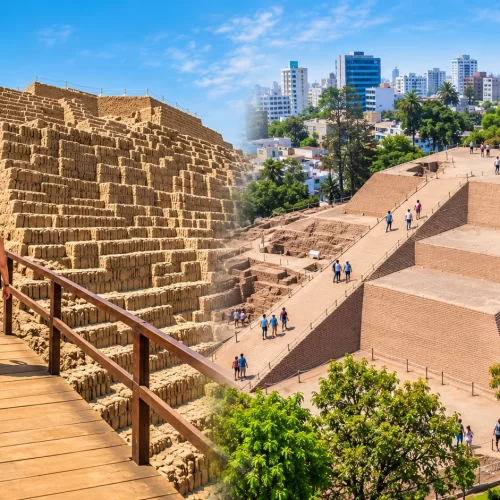
In the heart of Lima’s most sophisticated, cosmopolitan neighborhoods, an extraordinary architectural dialogue unfolds across millennia. Stepping onto the balconies of glass-and-steel luxury penthouses or walking along manicured boulevards lined with embassies and Michelin-caliber dining rooms, one suddenly encounters colossal, stepped adobe pyramids rising like golden desert mirages against the urban skyline. These are Lima’s monumental huacas—sacred pre-Columbian ceremonial complexes that flourished fifteen centuries before the Inca Empire conquered the Pacific coast.
Among the hundreds of archaeological mounds once scattered across the Rímac, Lurín, and Chillón river valleys, two magnificent survivors stand out as essential cultural monuments for the discerning traveler: Huaca Pucllana in residential Miraflores and Huaca Huallamarca in upscale San Isidro. Constructed from millions of sun-dried, handmade adobe bricks using ingenious seismic engineering techniques, these ancient citadels witnessed elaborate religious rites, oceanic worship of shark deities, and royal Wari burials adorned with gold and lapis lazuli.
To experience these ancient pyramids today is one of South America’s most surreal cultural luxuries. At Huaca Pucllana, you can marvel at ancient mudbrick walls that survived violent Pacific Rim earthquakes for 1,500 years, before dining on refined coastal cuisine on an illuminated terrace overlooking the glowing ceremonial facade. At Peruvian Luxe, we curate private archaeological visits accompanied by master curators, unlocking the deep spiritual history of Lima’s urban sanctuaries with exclusive access, private transport, and reserved front-row dining.
Planning an elevated cultural exploration of Lima? Connect with Peruvian Luxe on WhatsApp to arrange your private archaeological tour and pyramid-view dining experience.
The Surreal Urban Landscape: Ancient Temples Amid Modern Skyscrapers
Many international travelers arrive in Lima viewing it strictly as an airport transit hub or a gastronomic stopover en route to Cusco and Machu Picchu. Yet Lima is, in reality, one of the oldest continuously inhabited metropolitan areas on Earth. Long before Spanish conquistador Francisco Pizarro founded the “City of the Kings” in 1535, this coastal river basin supported dense agricultural chiefdoms, extensive irrigation canals, and massive ceremonial pyramid complexes.
Today, the juxtaposition between ancient and modern in Lima is breathtaking:
- In Miraflores, sleek modern apartments, high-end fusion restaurants, and leafy bicycle lanes surround the seven terraced platforms of Huaca Pucllana.
- In San Isidro, multinational bank headquarters, foreign consulates, and quiet residential mansions frame the imposing golden ramp of Huaca Huallamarca.
This stark coexistence—where ancient clay brick meets modern reflective glass—is found virtually nowhere else in the Americas. Rather than exiling antiquity to remote deserts, Lima integrates its deepest ancestral history directly into daily urban life.
Huaca Pucllana: The Engineering Masterpiece of the Lima Culture
Occupying roughly fifteen hectares in the heart of Miraflores, Huaca Pucllana (derived from the Quechua Pukllana, meaning “place for ritual games”) was the premier administrative and ceremonial epicenter of the Lima culture, which flourished between 200 AD and 700 AD.
The Revolutionary “Bookshelf Technique” (Técnica del Librero)
The defining architectural miracle of Huaca Pucllana is its revolutionary, earthquake-resistant construction method, known to structural engineers and archaeologists as the bookshelf technique (técnica del librero). Coastal Peru is situated directly atop the seismically volatile Pacific Ring of Fire, subject to catastrophic earthquakes every few decades.
To prevent their massive pyramid from fracturing and collapsing, Lima culture architects rejected solid, rigid walls. Instead, they hand-molded millions of small, rectangular adobe bricks resembling elongated bricks or books. These adobes were positioned vertically on end, side-by-side in small modular panels, leaving minute gaps of several centimeters between each vertical block. These modular panels were then separated by layer upon layer of packed gravel and clay mortar.
When an earthquake strikes, these vertical adobe panels do not shatter; rather, they vibrate independently, shifting and absorbing seismic energy like books jostling on a library shelf. Because of this ingenious indigenous engineering, Huaca Pucllana has withstood more than fifteen centuries of severe earthquakes without catastrophic structural failure.
Sacred Rituals & Marine Deities
The pyramid rises across seven stepped terraces to a height of twenty-five meters. The Lima culture was fundamentally an ocean-facing civilization; excavations have uncovered ceremonial murals painted in yellow and red, ceramic vessels depicting sharks, rays, and octopuses, and evidence of grand feasts where elite priests consumed deep-sea fish, shellfish, and chicha corn beer while offering sacrifices to sea deities to invoke life-giving rains in the high Andes.
The Wari & Ychsma Transformations
Around 700 AD, the Lima culture collapsed, and the expansionist Wari Empire from the southern highlands took control of the sanctuary. The Wari did not destroy the pyramid; instead, they honored its sanctity by converting its upper terraces into an elite cemetery for high nobility. Archaeologists have excavated intact Wari funerary bundles (fardos funerarios), most famously the tomb of the “Señor de los Unkus” (The Lord of the Tunics), buried with elaborate featherwork, silver nose ornaments, and carved wooden masks with inlaid shell eyes.
Living Biodiversity: Native Peruvian Flora & Fauna
Within the archaeological park’s botanical sector, visitors encounter living representatives of pre-Columbian life. You will see native crops cultivated millennia ago—including Pima cotton (naturally grown in shades of brown, tan, and cream), sweet potatoes, maize, and lucuma trees. In the adjoining enclosures, meet camelids (llamas and alpacas) and the famous Perro sin pelo del Perú (Peruvian Hairless Dog or Viringo), an ancient, affectionate breed revered as sacred companions by pre-Inca royalty.
Fine Dining in Antiquity: The Acclaimed Restaurant Huaca Pucllana
While exploring the pyramid during the day is intellectually captivating, experiencing it at night transforms antiquity into sublime luxury. Situated directly on the manicured perimeter of the archaeological complex, Restaurant Huaca Pucllana is universally recognized as one of the most romantic and visually mesmerizing dining rooms in the world.
Founded by restaurateur and culinary champion Arturo Rubio, the open-air covered terrace provides an unobstructed view of the entire stepped pyramid, illuminated after dusk by warm golden floodlights. The soft glow brings out every texture of the mudbrick terraces, creating a dramatic, golden amphitheater that dwarfs the candlelit white-linen tables below.
Gastronomic Highlights
The culinary philosophy celebrates classic Limeño and coastal recipes refined through modern haute gastronomy:
- Ceviche y Tiraditos de Pesca del Día: Wild catch from the Pacific, cured in fresh lime juice and yellow chili tiger’s milk, garnished with candied sweet potato and giant Andean corn.
- Arroz con Pato Norteño: Slow-braised tender duck leg infused with dark beer, fresh cilantro, and loche pumpkin, served over creamy coriander-scented rice.
- Lechón Confitado al Horno: Crispy-skinned suckling pig accompanied by sweet potato purée and caramel apple chutney.
- Signature Pisco Cocktails: Handcrafted Chilcanos and Pisco Sours made with small-batch Quebranta piscos, complemented by an award-winning South American wine list.
Peruvian Luxe pre-reserves the most coveted front-row veranda tables for our guests, perfectly coordinating your reservation to follow an intimate sunset tour of the pyramid.
Huaca Huallamarca: The Golden Shrine of San Isidro
Located just two kilometers north in the quiet, prestigious diplomatic neighborhood of San Isidro, Huaca Huallamarca presents a completely different, equally compelling architectural silhouette. Known colloquially for centuries as Pan de Azúcar (Sugar Loaf) due to its rounded, truncated profile, this golden-yellow adobe sanctuary stands in dramatic, silent isolation amidst private mansions and modern financial towers.
Origins and The Grand Ceremonial Access Ramp
Huallamarca’s earliest foundations date back to the Late Formative and Pinazo cultural horizons (circa 200 BC to 200 AD), making it centuries older than Huaca Pucllana. Originally built as a massive truncated temple pyramid, its most striking visual feature is a colossal, wide central access ramp that ascends gracefully from the plaza floor to the upper ceremonial platform.
Priests and high dignitaries climbed this monumental ramp to perform celestial astronomical observations, solar rituals, and community agricultural blessings. Unlike Pucllana’s modular “bookshelf” brickwork, Huallamarca was built using small, rounded conical adobe bricks (known as adobitos), which were laid horizontally and coated with layers of smooth yellow clay plaster.
From Temple to Sacred Necropolis
Around 600 AD, as political authority shifted across the valley, Huallamarca ceased functioning as an active temple. Instead, succeeding civilizations—notably the Wari and later the Ychsma (Ichma) culture—repurposed the sacred pyramid into a high-status necropolis. Over several centuries, dozens of elite individuals were buried within deep shafts dug into the pyramid’s upper terraces.
The On-Site Site Museum (Museo de Sitio)
Huaca Huallamarca houses an exceptional on-site museum that provides an intimate, undisturbed encounter with ancient burial rites. Because the coastal desert of Lima receives virtually zero rainfall, organic materials buried in the hyper-arid sand and adobe were preserved in near-perfect condition for over a millennium.
Treasures displayed in the museum include:
- Intact Mummy Bundles (Fardos Funerarios): Multi-layered textile bundles containing deceased aristocrats seated in a fetal position, wrapped in fine cotton fabrics, alpaca mantles, and reeds.
- False Heads (Cabezas Falsas): Remarkable painted wooden masks with inlaid shell eyes, hairpieces of human hair, and feathered crowns affixed to the top of mummy bundles to simulate living identity in the afterlife.
- Pre-Columbian Musical Instruments: Hand-carved ceramic panpipes (antaras), bone flutes, and ritual rattles used during funeral processions.
- Textile Implements & Jewelry: Exquisitely carved wooden spindles, spools of natural dyed alpaca threads, polished silver tweezers, and pre-Inca gold nose ornaments.
Comparative Analysis: Huaca Pucllana vs. Huaca Huallamarca
To help travelers tailor their archaeological journey through Lima, the following table compares the distinct characteristics, historical periods, and visiting highlights of each pyramid:
| Feature | Huaca Pucllana | Huaca Huallamarca |
|---|---|---|
| Neighborhood | Miraflores (Residential & Gastronomic) | San Isidro (Diplomatic & Financial) |
| Primary Construction Era | c. 200 AD – 700 AD (Lima Culture) | c. 200 BC – 200 AD (Formative / Pinazo), later Wari |
| Key Architectural Innovation | “Bookshelf technique” (vertical modular adobes for earthquake dissipation) | Monumental central ceremonial access ramp & conical adobes |
| Primary Ancient Purpose | Ceremonial, administrative, marine worship, elite feasts | Early ceremonial temple converted into elite Wari/Ychsma necropolis |
| On-Site Museum Highlights | Wari textile tunics, ceramic shark iconography, living native fauna (llamas, hairless dogs) | Intact mummy bundles (fardos), wooden false heads with hair, pre-Inca musical flutes |
| Dining Experience | World-class fine dining restaurant (Restaurant Huaca Pucllana) overlooking illuminated ruins | Quiet cultural visit; minutes from San Isidro’s premier culinary tables (Astrid y Gastón) |
| Visiting Atmosphere | Expansive, lively, visually dramatic under evening illumination | Intimate, peaceful, scholarly, contemplative |
| Optimal Time of Visit | Late afternoon (5:00 PM) transitioning into evening dinner | Morning (10:00 AM) paired with a stroll through the Olive Grove |
Curated Itinerary: The Ultimate 1-Day Ancient & Modern Lima Route
To appreciate how pre-Columbian heritage seamlessly weaves into modern Limeño luxury, Peruvian Luxe recommends dedicating a full day to Lima’s ancient masterpieces:
Morning: San Isidro & Huallamarca
- 09:30 AM – Private Chauffeur Pickup: Depart your luxury hotel in Miraflores for a short drive through the historic mansions of San Isidro.
- 10:00 AM – Private Curator Tour of Huaca Huallamarca: Climb the grand ceremonial ramp with your private archaeologist guide and inspect the intact mummy bundles in the site museum.
- 11:30 AM – The Olive Grove of San Isidro (Bosque El Olivar): Enjoy a peaceful walk beneath four-hundred-year-old olive trees planted during early colonial times, followed by boutique browsing on Calle Miguel Dasso.
- 01:00 PM – Haute Cuisine Lunch: Savor modern Peruvian gastronomy at Astrid y Gastón in the historic Casa Moreyra hacienda.
Afternoon: The Master Treasures at Museo Larco
- 03:00 PM – Pre-Columbian Gold & Erotic Art: Continue by private luxury SUV to Pueblo Libre for a private tour of the world-famous Larco Museum, examining five thousand years of gold metallurgy and Moche ceramics.
Evening: Sunset & Dinner at Huaca Pucllana
- 05:30 PM – Private Twilight Tour of Huaca Pucllana: Arrive in Miraflores as the late afternoon light softens. Walk the upper terraces of Pucllana, observing the “bookshelf technique” and meeting native Peruvian hairless dogs.
- 07:00 PM – Reserved Pyramid-View Dinner: Conclude your day at a prime veranda table at Restaurant Huaca Pucllana, sipping artisanal Pisco Sours as the floodlights illuminate fifteen centuries of clay history directly in front of you.
Practical Advice for Discerning Visitors: Timing, Footwear & Photography
Day Visits vs. Evening Night Tours
Huaca Pucllana offers both daytime and specialized night tours. The daytime tour allows you to appreciate the subtle earthy textures of the adobes, inspect archaeological excavations in progress, and explore the botanical gardens. The night tour, by contrast, is purely atmospheric: soft dramatic lighting highlights the modular masonry against the dark sky, creating an enchanting mood before dinner.
Huaca Huallamarca operates primarily during daytime hours (Tuesday through Saturday from 9:00 AM to 5:00 PM). Morning visits provide optimal natural lighting for viewing the central ramp and exploring the quiet site museum.
Footwear and Mobility
Both archaeological sites feature unpaved gravel ramps, uneven dirt paths, and ancient clay steps. Sturdy, comfortable walking shoes or stylish designer sneakers with non-slip soles are strongly recommended. High heels are strictly impractical and prohibited on the ancient adobe platforms.
Preservation Etiquette
Sun-dried adobe is an extraordinarily fragile material, vulnerable to abrasion and moisture. Visitors must stay strictly on marked wooden walkways and designated gravel paths. Touching the raw adobe bricks or climbing unrestored walls is strictly forbidden to protect this irreplaceable patrimony for future generations.
Frequently Asked Questions About Huaca Pucllana and Huaca Huallamarca
What is a 'Huaca' in Peru?
In the Quechua language, the word ‘huaca’ (or wak’a) refers to any sacred monument, shrine, temple, or natural feature revered by ancient Andean peoples. In modern coastal Peru, the term is specifically used to designate the immense mudbrick and adobe ceremonial pyramid complexes, palaces, and administrative centers built by pre-Inca cultures across coastal river valleys.
How old are Huaca Pucllana and Huaca Huallamarca?
Huaca Huallamarca is the older of the two, with its earliest construction phases dating back to roughly 200 BC to 200 AD during the late Formative period. Huaca Pucllana was constructed primarily by the Lima culture between 200 AD and 700 AD. Both sites predate the Inca Empire (which expanded to the coast around 1470 AD) by more than a thousand years.
What is the 'bookshelf technique' at Huaca Pucllana?
The ‘bookshelf technique’ (técnica del librero) is an ingenious seismic engineering method developed by the Lima culture. Instead of laying bricks flat and solid, builders placed handmade adobe bricks vertically on end with small gaps between them, resembling books on a shelf. During earthquakes, these vertical bricks vibrate and shift independently, dampening seismic shockwaves and preventing the pyramid from collapsing.
Can you dine at Huaca Pucllana at night?
Yes. The acclaimed Restaurant Huaca Pucllana is located directly on the grounds of the archaeological site in Miraflores. Guests can enjoy world-class contemporary Peruvian cuisine on an open-air covered terrace while gazing directly at the floodlit, illuminated pre-Inca pyramid. Advance reservations are strongly recommended.
Is there a restaurant at Huaca Huallamarca?
No, Huaca Huallamarca does not have an on-site restaurant. It is a quiet, contemplative archaeological site and museum in San Isidro. However, it is located within a 5-minute private drive of many of San Isidro’s finest culinary institutions, including Astrid y Gastón at Casa Moreyra and top restaurants along Calle Miguel Dasso.
What can you see in the museum at Huaca Huallamarca?
The Huaca Huallamarca site museum displays extraordinary pre-Columbian funerary artifacts preserved by the dry coastal desert: intact mummy bundles (fardos funerarios), painted wooden ‘false heads’ with real human hair and shell eyes, ancient ceramic panpipes and bone flutes, weaving tools, and gold and silver jewelry.
Are guided tours required to visit Huaca Pucllana?
Yes, access to the archaeological ruins of Huaca Pucllana is strictly permitted only in the company of an authorized official guide to protect the fragile adobe structures. Peruvian Luxe arranges private specialized guides (archaeologists or art historians) who provide exclusive, in-depth private tours for our guests without joining commercial public groups.
What are the Peruvian Hairless Dogs seen at Huaca Pucllana?
The Peruvian Hairless Dog (Perro sin pelo del Perú or Viringo) is an ancient canine breed native to Peru that has existed for over three thousand years, frequently depicted on pre-Columbian ceramics. Officially recognized as cultural heritage of Peru, these warm-bodied, affectionate dogs reside on the grounds of major archaeological sites, including Huaca Pucllana.
How much time should I allocate to visit both pyramids?
A thorough visit to Huaca Pucllana takes approximately 1.5 to 2 hours, plus additional time if dining at the restaurant. A visit to Huaca Huallamarca and its site museum takes about 1 hour. Both pyramids can easily be visited in a single day, or combined with other cultural highlights like the Larco Museum.
How does Peruvian Luxe arrange a private archaeological experience in Lima?
Peruvian Luxe designs completely bespoke cultural days: private chauffeured luxury SUVs, dedicated archaeologist guides for private tours of both Huaca Pucllana and Huaca Huallamarca, after-hours access coordination, and guaranteed prime veranda table reservations at Restaurant Huaca Pucllana.
Discover the Ancient Soul of Lima with Peruvian Luxe
Standing before the glowing mudbrick terraces of Huaca Pucllana or ascending the monumental ramp of Huaca Huallamarca, you witness a facet of Peru that few travelers ever fully appreciate: an ancient, sophisticated coastal empire whose sacred monuments still beat with life in the center of a modern world capital.
At Peruvian Luxe, we elevate your time in Lima from ordinary sightseeing into an unforgettable encounter with living history. With private archaeologist guides, luxury chauffeured comfort, and reserved front-row tables overlooking illuminated millennia-old monuments, your Peruvian journey begins in timeless elegance.
Connect with our private travel designers today. Contact Peruvian Luxe on WhatsApp and let us curate your private archaeological journey in Lima.