Contact us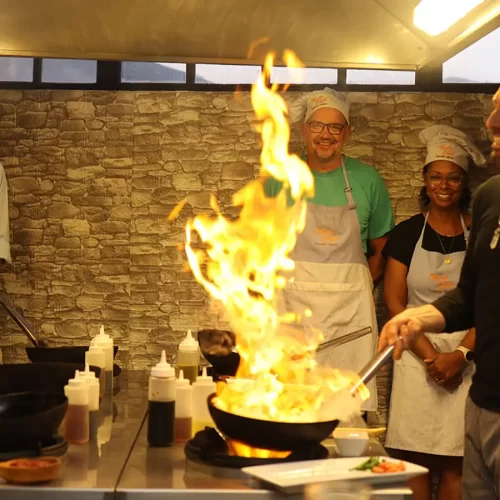
Peruvian cuisine has earned a permanent seat at the global table. Lima anchors multiple world’s-best-restaurant rankings simultaneously. Cusco, meanwhile, offers something rarer than accolades — the raw material itself: heirloom potatoes pulled from terraces the Inca engineered, quinoa varieties absent from any supermarket shelf, herbs that grow only above 3,000 meters, and a culinary tradition that never fully surrendered to colonial interruption. For luxury travelers who eat intentionally wherever they go, a premium cooking class in Cusco is not a tourist checkbox. It is a direct line to the civilization beneath your feet.
The best culinary experiences here share a philosophy: small groups, elite instructors, market sourcing that morning, and settings — heritage kitchens, Sacred Valley farm tables, colonial courtyards — that transform technique into ceremony. You will leave knowing not just how to build a Peruvian causa or layer a ceviche leche de tigre, but understanding the agricultural lineage behind every ingredient your hands touched.
At Peruvian Luxe, we incorporate bespoke culinary experiences within our private itineraries for travelers who regard food as foundational rather than supplemental. If you want a private chef, a curated market walk, and a dining table set for your group alone, speak with our planners and we will design it around your schedule and dietary world.
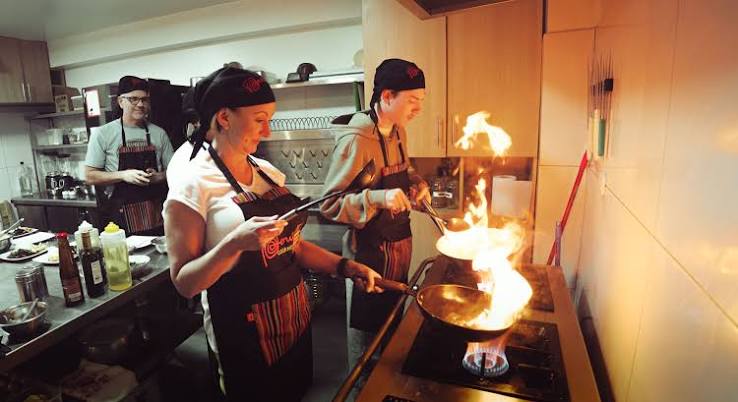
Luxury cooking class in Cusco colonial kitchen with local ingredients quinoa potatoes and Andean herbs on wooden table.
Why Cusco Is One of the World’s Best Cities for a Culinary Masterclass
Most culinary capitals export ingredients. Cusco’s distinction is that it originated them. The Andean highlands are the birthplace of the potato — over 3,000 native varieties grow across Peru — and the cradle of quinoa cultivation stretching back 5,000 years. Maize, oca, mashua, choclo, cañihua: the ingredient map here reads like a botanical archive that Europe and North America have barely discovered.
Cusco’s culinary identity today fuses three overlapping traditions:
- Pre-Columbian Andean: Freeze-drying (chuño), fermentation, clay-pot roasting, earth oven (pachamanka) — techniques that predate European contact by millennia.
- Colonial mestizo: The Spanish kitchen cross-pollinating native ingredients with Old World technique — adobo de chancho, chicha-braised dishes, colonial-era sweets.
- Novo-Andino: The contemporary movement championed by chefs like Gastón Acurio and Virgilio Martínez — rescuing heirloom ingredients and reframing them through fine-dining discipline.
A quality cooking class in Cusco teaches all three layers simultaneously. That breadth is what separates a Cusco culinary experience from a cooking school afternoon anywhere else on earth.
The Anatomy of a Premium Cooking Class in Cusco
Not every class advertised as “luxury” deserves the label. The defining markers of a genuinely upscale culinary experience in Cusco are consistent across the best providers:
Characteristics of a Truly Luxury Cooking Experience
- Private or ultra-small group format: Two to eight participants — never a classroom of strangers. Your pace, your questions, your dietary focus.
- San Pedro Market immersion first: The best classes begin with a guided walk through Cusco’s central market — the chef narrating ingredient selection, bargaining with trusted vendors, and explaining what each product is, where it originates, and why it belongs in the dish you are about to make.
- Professional chef instruction: Not a cooking enthusiast with a business license — a culinary-trained professional, ideally one who has worked in Peru’s finest restaurant kitchens or trained internationally.
- Heritage kitchen or exceptional setting: A colonial courtyard kitchen, a Sacred Valley farmhouse, a high-altitude terrace with mountain views — the environment is part of the luxury proposition.
- Wine, pisco, and chicha pairing: Dishes served with curated beverages — pisco sour aperitivos on arrival, South American wine through the meal, and ceremonial chicha morada for those curious about Andean fermentation tradition.
- Recipe portfolio and printed materials: Your dishes documented with ingredient sources, notes on altitude adaptations, and sourcing suggestions for replicating at home.
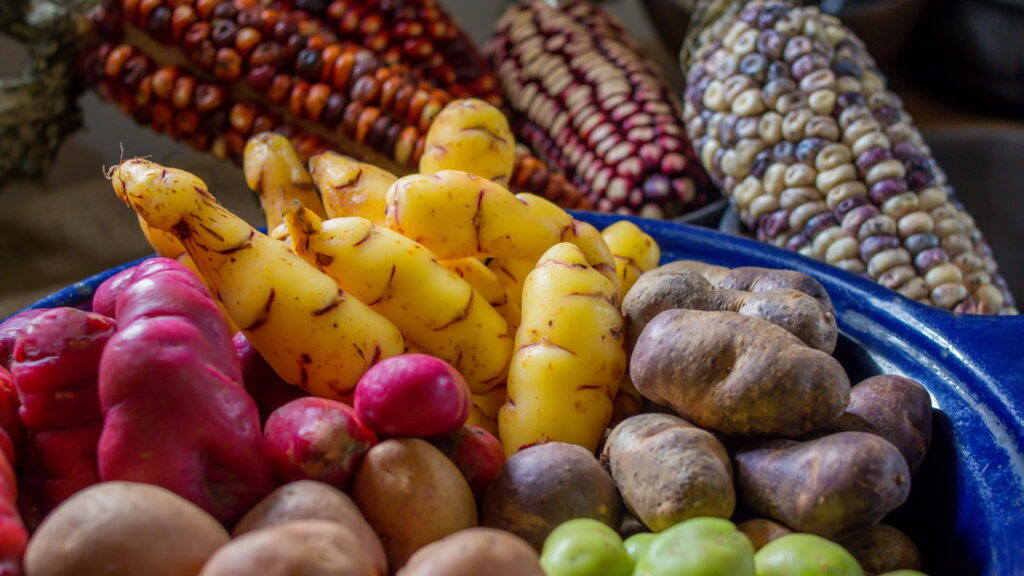
San Pedro Market Cusco with colorful display of native Peruvian potatoes quinoa and Andean herbs for culinary tour.
Top Luxury Cooking Class Experiences in Cusco
1. Private Peruvian Cooking Class at a Colonial Cusco Estate
Several heritage property hotels in Cusco — including properties reviewed in our luxury Cusco hotel guide — offer in-house cooking experiences for their guests, sometimes extendable to private bookings for non-residents. These are frequently the most seamless option: the kitchen is masterfully equipped, the chef knows the building’s provenance, and the dining table is set with the same care as the hotel restaurant.
Typical format: arrival aperitivo → market tour briefing → hands-on preparation of three to four dishes (entrada, main, dessert) → seated private lunch or dinner with wine pairing → recipe folio.
2. Farm-to-Table Cooking in the Sacred Valley
The Sacred Valley — Inca agricultural heartland — harbors several high-end farm culinary experiences where chefs work directly with what is harvested that morning. You might roast freshly dug purple potatoes in a clay pot, shuck giant choclo from the stalk twenty meters away, or grind dried ají amarillo to paste on a pre-Columbian stone batan.
This format is inherently theatrical because the landscape is the backdrop — cooking against terraced Inca fields with Andean peaks ringing the valley. Paired with a VIP Sacred Valley tour, a farm cooking experience becomes a full-day sensory immersion rather than a standalone activity.
3. Pachamanka Earth Oven Experience
Pachamanka — meaning “earth pot” in Quechua — is an ancient cooking method in which heated stones are layered with meats, tubers, and aromatic herbs in a pit dug into the ground, then sealed and slow-cooked underground. It is simultaneously agricultural ritual and extraordinary culinary performance.
Premium pachamanka experiences include the excavation ceremony, explanation of the cosmological significance of cooking within the earth (Pachamama, Mother Earth), hands-on participation in preparation, and a feast-style communal meal with chicha de jora, the Andean fermented maize drink served since Inca times. This is not a restaurant dish — it is a living cultural practice, and encountering it with knowledgeable guides transforms it from curiosity to revelation.
4. Private Novo-Andino Tasting Class with a Michelin-Pedigreed Chef
For travelers whose reference point is Noma, Eleven Madison Park, or Central, Cusco’s emerging generation of Novo-Andino chefs — several trained under Peru’s finest kitchens — offer private consultation-style experiences: an ingredient laboratory where you explore native produce, a collaborative menu construction conversation, and ultimately a co-created tasting menu that you both prepare and eat.
This format skews closest to the private chef experience at home but with a geographic advantage no home kitchen possesses: the ingredients are locally sourced that day, and the chef’s cultural context is the civilisation that invented them.
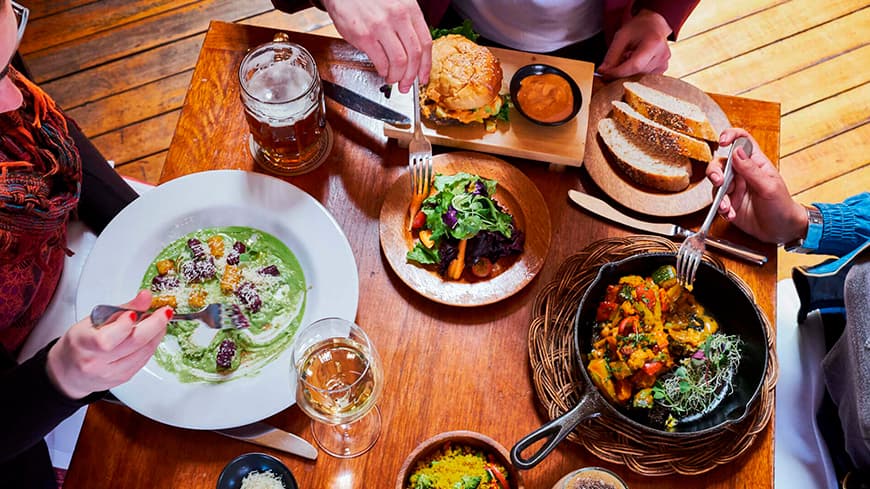
Novo-Andino gourmet tasting plate featuring native Peruvian ingredients quinoa causa and edible flowers Cusco restaurant.
Core Dishes You Will Learn in a Luxury Cusco Cooking Class
| Dish | Category | Key Andean ingredients | Technique highlight |
|---|---|---|---|
| Ceviche with leche de tigre | Cold entrée | Corvina, ají limo, rocoto, yellow chilli | Acid cure timing, tiger’s milk balance |
| Causa limeña | Cold entrée | Native yellow potato, ají amarillo | Potato texturing, terrine layering |
| Quinoa risotto (quinotto) | Main course | Royal quinoa, Sacred Valley herbs | Starch extraction replicating risotto body |
| Lomo saltado | Main course (wok fusion) | Peruvian beef, tomato, ají amarillo | High-heat stir-fry, chifa influence |
| Ají de gallina | Main course | Hen, ají amarillo paste, walnuts, bread | Slow reduction, emulsion building |
| Picarones | Dessert | Squash, sweet potato, chancaca syrup | Andean doughnut frying, syrup caramelisation |
| Pisco sour | Cocktail | Quebranta pisco, egg white, lime | Emulsification, foam construction |
Booking Logistics: What to Know Before You Reserve
Group Size and Privacy
Peruvian Luxe strongly recommends private or semi-private formats — maximum eight guests — for a cooking class in Cusco to feel authentically luxurious. Classes of twenty feel like school outings regardless of chef quality. The intimacy of a private kitchen enables genuine conversation, personal technique coaching, and menu customisation around dietary preferences or culinary curiosity.
Altitude Adaptation Note
Baking at 3,400 metres behaves differently — leavening agents react faster, liquid absorption in doughs shifts, and heat distribution in unfamiliar clay or copper cookware surprises even experienced home cooks. Expert Cusco chefs will explain these altitude adjustments; it is one of the genuinely fascinating technical layers unavailable in any sea-level cooking school.
Duration and Scheduling
Quality experiences run three to five hours including market walk. Schedule culinary classes for your second or third day in Cusco — by then altitude acclimatisation stabilises appetite and sensory attunement, and you have already oriented yourself to neighbourhood geography for the market walk.
What to Wear and Bring
- Comfortable, non-restrictive clothing you don’t mind getting aromatic
- Closed-toe shoes (kitchen protocol, stone market floors)
- A small notebook if you sketch — chefs often improvise ratio notes verbally that won’t appear in the printed recipe folio
- Appetite — these classes conclude with a proper meal, not a tasting portion
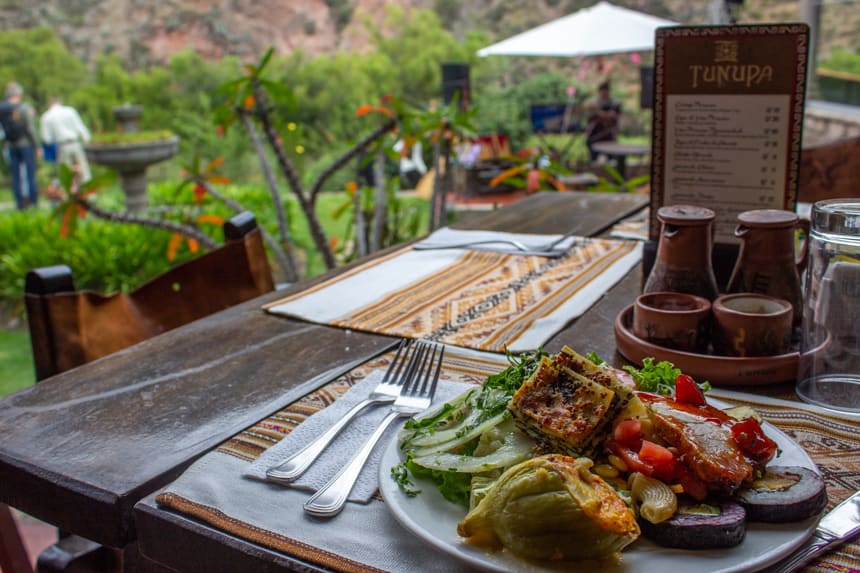
Private gourmet lunch table set outdoors in Sacred Valley Peru with mountain backdrop and Peruvian dishes.
Pairing Your Cooking Class with a Wider Cusco Culinary Day
The most satisfying culinary days in Cusco follow a deliberate arc:
- Morning: San Pedro Market walk with your chef — ingredient education, produce sourcing, chicha tasting at stalls
- Midday: Hands-on cooking class and private seated lunch with wine/pisco pairing
- Late afternoon: Rest, altitude recovery, spa at your hotel
- Evening: Reservation at one of Cusco’s finest dining establishments — the afternoon in the kitchen makes dinner conversation considerably richer
Ask our planners about combining this with a full Sacred Valley farm day, where the cooking narrative continues in an entirely different agricultural environment.
How Peruvian Luxe Designs Your Culinary Experience
We do not direct you to a public booking page and consider our job done. We identify the right chef for your specific culinary background, negotiate private access, confirm dietary architectures, and coordinate timing within your broader itinerary so the day flows without logistical friction.
For groups celebrating occasions — milestone birthdays, anniversary dinners, culinary-focused honeymoons — we can arrange the cooking class to culminate in a private terrace dinner with a sommelier-curated Peruvian wine pairing, Andean musicians, and floral arrangements sourced that morning from the valley market.
Begin with our contact form or reach us directly on WhatsApp — and tell us what your group loves to eat. We build from there.
Are there luxury private cooking classes in Cusco?
Yes. Several providers in Cusco offer fully private cooking experiences — your group only, professional chef instruction, San Pedro Market walk included, and a seated private meal to close. Peruvian Luxe selects and coordinates these specifically around group size, dietary requirements, and preferred culinary focus (traditional Andean, Novo-Andino, farm-to-table, or pachamanka ceremony).
What dishes do you learn in a cooking class in Cusco?
Most premium Cusco cooking classes teach a cross-section of Peruvian cuisine: typically ceviche and leche de tigre, causa limeña, a quinoa-based main such as quinotto, lomo saltado, ají de gallina, and a traditional dessert. A pisco sour tutorial is almost always included. Classes focused on Novo-Andino cooking add a creative layer using native ingredients like cañihua, mashua, or edible wild herbs.
How long does a luxury cooking class in Cusco last?
Quality experiences run three to five hours, typically including a San Pedro Market walk of 45–60 minutes followed by two to three hours in the kitchen and a seated lunch or dinner. Private chef formats for milestone occasions can extend to full half-day experiences with an outdoor dining component.
What is a pachamanka experience in Cusco?
Pachamanka is an ancient Andean cooking method — meats, tubers, and herbs sealed and slow-cooked underground with heated stones. Premium pachamanka experiences in Cusco include the excavation ritual, cultural explanation of its Inca origins and cosmological significance, hands-on preparation participation, and a communal feast accompanied by chicha de jora.
What is the best area in Cusco for a culinary cooking class?
Cusco’s historic centre — particularly colonial courtyards near San Blas and the Plaza de Armas — hosts the most atmospheric kitchen settings. For farm-immersion formats, the Sacred Valley (Urubamba, Ollantaytambo) provides extraordinary agricultural backdrop. Peruvian Luxe can arrange both based on your itinerary dates and day structure.
Can a cooking class in Cusco accommodate dietary restrictions?
Private format cooking classes are ideally suited to dietary customisation — vegetarian, vegan, gluten-free, or allergy-aware menus are straightforward when the class is yours exclusively and the chef is briefed in advance. Communicate restrictions at booking stage for full menu adaptation without compromise.
How much does a private cooking class in Cusco cost?
Private luxury cooking class pricing in Cusco varies by duration, instructor seniority, location, and inclusions. Market-walk-inclusive private experiences for two to four guests typically start around USD 150–250 per person. Extended farm-to-table or Novo-Andino private chef formats with wine pairing can reach USD 350–500 per person. Peruvian Luxe can advise on current pricing and bundle cooking classes within wider itinerary packages.
What is the difference between Andean cuisine and Novo-Andino cuisine?
Traditional Andean cuisine is rooted in pre-Columbian and colonial techniques — clay-pot cooking, freeze-drying, fermentation, pachamanka. Novo-Andino is a contemporary culinary movement that applies modern fine-dining technique (emulsification, deconstruction, molecular elements) to native Andean ingredients like native potatoes, quinoa, cañihua, and Amazonian fruits — producing a cuisine that is simultaneously ancient and avant-garde.
Is a cooking class good for a honeymoon in Cusco?
Absolutely. A private cooking class is one of the most intimate and memorable shared experiences available in Cusco — you cook together, eat together, and leave with a shared culinary vocabulary rooted in one of the world’s most extraordinary food cultures. Peruvian Luxe can tailor honeymoon cooking experiences with champagne arrivals, private terrace dining, and floral personalisation.
Can Peruvian Luxe book a cooking class as part of a wider Peru itinerary?
Yes — cooking classes are a standard element of Peruvian Luxe’s bespoke itinerary builds. We identify the right format (colonial kitchen, Sacred Valley farm, pachamanka ceremony) based on your travel dates, group profile, and culinary interests, then coordinate scheduling alongside tours, hotel check-ins, and restaurant reservations for a seamless culinary day.
Every great ingredient has a story that begins in the soil before it reaches a kitchen. In Cusco, that soil was farmed by the most sophisticated agricultural civilisation the Americas produced. A luxury cooking class here does not just teach you how to cook Peruvian food — it connects you to the civilisation that invented the ingredients you are holding.
Contact Peruvian Luxe to add a private culinary experience to your Cusco itinerary. You can also reach us on WhatsApp at +51 917 078 725 — available seven days a week.