Contact us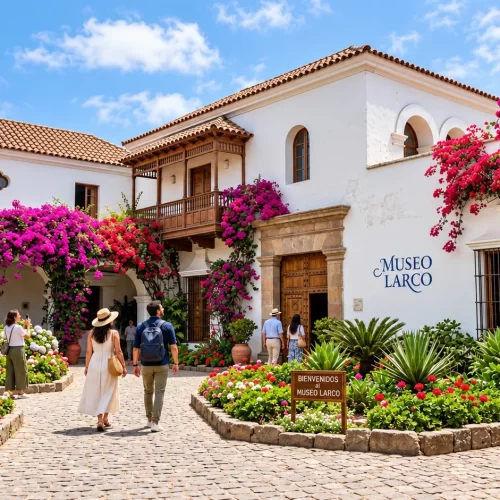
Housed within an elegant eighteenth-century vice-royal mansion draped in cascading bougainvillea, bromeliads, and hanging cacti, the Larco Museum (Museo Larco) is universally celebrated as the crown jewel of Lima’s cultural landscape. Situated in the traditional residential enclave of Pueblo Libre, this privately curated sanctuary does not merely display artifacts behind glass; it unlocks five thousand years of ancient Peruvian civilization, illuminating the sacred cosmos, shamanic transformations, and peerless metalcraft of cultures that flourished millennia before the rise of the Inca Empire.
Founded in 1926 by the pioneering Peruvian archaeologist Rafael Larco Hoyle, the museum preserves an unparalleled collection of over forty-five thousand cataloged archaeological pieces. From the dazzling luminescence of the pre-Columbian Gold and Silver Gallery to the world-famous, mythologically profound Erotic Ceramics Gallery, every gallery offers an intimate dialogue with the ancient Andean mind. What sets Museo Larco further apart is its renowned Open Storeroom—an unprecedented privilege allowing visitors to walk directly among thirty thousand classified ceramic vessels—and its critically acclaimed garden restaurant, where candlelit fine dining takes place beneath a fragrant canopy of orchids and illuminated colonial arches.
At Peruvian Luxe, we believe the Larco Museum should never be experienced as a hurried stopover between flights. We curate exclusive, private visits led by specialized art historians and archaeological curators, offering after-hours access, private salon viewings, and reserved veranda tables for dinner in the museum’s illuminated private gardens.
Planning your bespoke cultural journey to Lima? Connect with Peruvian Luxe on WhatsApp to arrange your private Museo Larco curator experience.
The Setting: An 18th-Century Vice-Royal Mansion Atop a 7th-Century Pyramid
The magic of the Larco Museum begins long before you cross the threshold of its first exhibition gallery. The museum is constructed directly upon the flattened summit of a seventh-century pre-Columbian adobe pyramid (huaca). Atop this ancient sacred mound sits a whitewashed vice-royal mansion dating back to the eighteenth century, featuring arched porticos, hand-carved wooden balustrades, polished terracotta tiles, and sun-drenched interior patios.
Ascending the gentle garden ramp to the entrance, guests are enveloped by an award-winning botanical oasis. Over three hundred species of indigenous Peruvian flora, towering jacarandas, flowering bougainvillea in vivid magenta, orange, and white, and century-old cacti create a sensory barrier that completely filters out the bustling energy of metropolitan Lima. The juxtaposition of living floral beauty, colonial architecture, and pre-Columbian foundations establishes an atmosphere of profound serenity and timeless elegance.
Rafael Larco Hoyle deliberately chose this architectural setting to emphasize cultural continuity. Rather than presenting pre-Columbian cultures as extinct curiosities, the museum frames them as the foundational layer of Peruvian identity—a philosophy evident in every curated corridor.
Five Millennia of Mastery: The Core Pre-Columbian Chronology
A common misconception among international travelers is that Peruvian civilization began and ended with the Incas. In reality, the Inca Empire spanned barely one hundred years before the arrival of the Spanish. The genius of the Larco Museum lies in its chronological narrative, guiding visitors through four thousand years of complex pre-Inca societies that engineered sophisticated irrigation systems, discovered advanced metallurgy, and produced some of the most expressive ceramic art in human history.
The Four Epochs of Ancient Peru
The museum organizes its permanent collection through four distinct developmental epochs, each representing major cultural leaps across the Northern Coast, Southern Desert, and Andean Highlands:
- The Pre-Ceramic and Formative Epoch (1250 BC – 1 AD): Anchored by the Cupisnique and Chavín cultures. Ceramic vessels from this era feature heavy stirrup spouts, burnished monochrome surfaces, and fierce feline, serpent, and raptor imagery reflecting early shamanic jaguar cults.
- The Regional Development Epoch (1 AD – 800 AD): The golden age of regional artistic expression. This era produced the master portrait vessels (huacos retratos) and lifelike narrative ceramics of the Moche civilization on the northern coast, alongside the breathtaking polychrome ceramics and ethereal embroidered textiles of the Nazca and Paracas cultures on the southern coast.
- The Imperial Epoch (800 AD – 1300 AD): Marked by large-scale political unification under the Huari (Wari) Empire—the first true urban empire of the Andes—characterized by bold geometric abstraction and standardized administrative iconography.
- The Late Epoch (1300 AD – 1532 AD): Highlighting the immense maritime wealth and master metalworking of the Chimú and Lambayeque (Sicán) kingdoms, culminating in the imperial administrative dominance and stonemasonry of the Inca.
Walking through these galleries with a Peruvian Luxe private guide brings each epoch to life, decoding the symbolic iconography embedded in each vessel—from water rituals to sacrificial combat and celestial constellations.
The Gold and Silver Gallery: Sacred Metallurgy & Shamanic Transformation
Stepping into the climate-controlled vaults of the Gold and Silver Gallery is an awe-inspiring experience. Here, under darkened ceilings and precision spotlights, rests the largest private collection of pre-Columbian gold and silver ceremonial ornaments in the world.
To modern Western sensibilities, gold represents material wealth and financial currency. To the ancient peoples of Peru, however, precious metals held zero monetary value. Instead, they were sacred spiritual conduits:
- Gold (The Sweat of the Sun): Represented the masculine deity, celestial warmth, daylight, daytime sovereignty, and life-giving energy.
- Silver (The Tears of the Moon): Symbolized the feminine divine, the night sky, water, fertility, and the subconscious realm of dreams and ancestors.
Crowns, Pectorals & Shamanic Regalia
Rulers and high priests were buried adorned in complete suites of gold and silver attire: soaring crowns beaten from paper-thin gold sheets, heavy pectoral breastplates, delicate nose ornaments (narigueras) that concealed the human mouth to transform the wearer into a supernatural feline, and saucer-sized ear spools inlaid with turquoise, lapis lazuli, and mother-of-pearl.
When an ancient Andean ruler stepped into the blazing coastal sunlight clad in these shimmering, kinetic ornaments, he ceased to be merely human in the eyes of his people. He became a living mirror of the cosmos—a dazzling embodiment of divine radiance who bridged the terrestrial realm (Kay Pacha) and the celestial world above (Hanan Pacha). The Larco Museum’s curation reveals the intricate techniques used by pre-Columbian goldsmiths millennia before European contact, including lost-wax casting, repoussé, electrochemical gold plating, and complex alloy soldering.
The Renowned Erotic Ceramics Gallery: Sacred Sexuality & Cosmic Duality
No gallery at Museo Larco garners more international fascination—and frequent misunderstanding—than the celebrated Galería de Arte Erótico. First brought into academic study by Rafael Larco Hoyle in the mid-twentieth century, this world-renowned collection showcases hundreds of Moche ceramic vessels depicting explicit sexual acts, anatomical studies, and skeletal figures in intimate embraces.
While nineteenth-century Victorian collectors deemed these pieces scandalous or pornographic, modern archaeological and anthropological research reveals that they were intensely sacred objects imbued with profound religious, agricultural, and cosmological symbolism.
Decoding Moche Sexual Iconography
In the harsh, arid northern coastal desert, survival depended entirely on the delicate balance between drought and devastating El Niño floods. To the Moche mind, the human body and sexual fluids were micro-reflections of universal cosmic forces:
- Fertility and Irrigation: Non-reproductive sexual acts depicted on funerary vessels were symbolic offerings of vital energy, representing the union of opposing forces—water and earth, life and death, sun and moon—necessary to trigger rainfall and fertile crops.
- The Ancestral Conduit: Many vessels feature animated skeletal ancestors engaging with living beings. In Andean thought, the dead did not leave this world; they resided in the underworld (Uku Pacha), acting as cosmic custodians of seeds, minerals, and subterranean aquifers. Intimacy with ancestors symbolized the ongoing regeneration of life from death.
- Spiritual Transformation: Ceramic sculptures of zoomorphic beings—felines, bats, and owls engaged in ritual unions—depicted shamans crossing the boundary between human consciousness and the spirit realm during trance states induced by the sacred San Pedro cactus.
Experiencing this gallery with an expert curator provides an enlightening perspective on how ancient Andean civilizations perceived the sacred nature of the body, reproduction, and the cycles of cosmic regeneration.
The Open Storeroom (Depósito Abierto): An Exclusive Look Behind the Scenes
In virtually all premier museums around the world—from the Louvre to the Metropolitan—over ninety percent of the permanent collection remains hidden behind locked doors in secure archives, accessible only to credentialed academics. Museo Larco revolutionizes this dynamic with its remarkable Open Storeroom.
Here, visitors are invited to step directly into the museum’s working repository. Towering floor-to-ceiling glass cabinets house more than thirty thousand classified ceramic vessels, meticulously arranged according to culture, geographic origin, and iconographic themes:
- The Portrait Vessels (Huacos Retratos): Rows of strikingly realistic Moche portrait heads capturing specific historical individuals—warriors, priests, captives, and aristocrats—with individual facial expressions, scars, deformities, and emotions preserved across fifteen hundred years.
- Fauna & Flora: Detailed realistic representations of llamas, jaguars, condors, sharks, frogs, squashes, ears of corn, and manioc roots, illustrating the ancient Peruvians’ reverence for biodiversity.
- Mythological Scenes: Intricate line drawings (fineline painting) depicting epic battles between sea gods, celestial deities, and mythological demon-crabs.
Walking the aisles of the Depósito Abierto is an overwhelming, breathtaking experience. It conveys the immense productivity, technical mastery, and artistic genius of ancient Peruvian artisans on an unforgettable scale.
Comparative Overview: Civilizations & Must-See Treasures at Museo Larco
To help navigate the vast richness of the museum, the following table summarizes the key pre-Columbian civilizations featured, their historical periods, and their signature masterworks:
| Civilization & Region | Historical Era | Signature Artistic Medium | Crown Masterwork at Museo Larco | Cosmological Meaning |
|---|---|---|---|---|
| Cupisnique & Chavín (Northern Coast & Highlands) | 1250 BC – 1 AD | Burnished blackware ceramics with heavy stirrup spouts | Feline Shaman Stirrup Vessel | Shamanic transformation into the jaguar, master of terrestrial predators |
| Paracas (Southern Coast) | 800 BC – 200 BC | Polychrome embroideries and resin-painted post-fired ceramics | Paracas Necropolis Mantle Fragments & Trepanned Skulls | Ancestor worship and complex early cranial surgery techniques |
| Nazca (Southern Desert) | 100 BC – 800 AD | Polychrome slip ceramics using up to 13 mineral pigments | Mythical Killer Whale & Harvester Vessels | Water and fertility prayers echoed in the famous Nazca Lines geoglyphs |
| Moche (Northern Coast) | 100 AD – 800 AD | Sculptural ceramics, fineline painting, and gold/copper bi-metallic art | Huacos Retratos (Portrait Heads) & Erotic Ritual Vessels | Individual human identity, military sacrifice, and cosmic fertility rituals |
| Chimú & Lambayeque (Northern Coast) | 900 AD – 1470 AD | Blackware ceramics, silver pectorals, and gold ceremonial tumis | Lambayeque Gold Ceremonial Headdress & Masks | Divine lunar kingship and wealth derived from deep ocean diving |
| Inca (Southern Highlands) | 1400 AD – 1532 AD | Polychrome geometric aribalos and ceremonial wooden keros | Inca Imperial Aribalo Jar with Fern Motifs | State administrative redistribution of sacred chicha corn beer |
Private Garden Dining: The Renowned Cafe del Museo Larco
A private visit to the Larco Museum should never conclude at the gallery exit. Tucked beneath the whitewashed arches of the estate’s lower veranda, overlooking manicured lawns, stone fountains, and towering blooming jacarandas, lies Cafe del Museo Larco—widely acclaimed as one of the most romantic and visually stunning dining venues in South America.
Conceived by legendary Peruvian chef Gastón Acurio and executed with flawless culinary precision, the restaurant marries modern Peruvian gastronomic flair with comfort-driven traditional recipes. Dining here is an unhurried, multi-sensory pleasure, whether enjoying a sunlit lunch following a morning tour or an intimate dinner under soft garden lighting as the colonial facades glow warmly in the evening.
Signature Culinary Highlights
- Ceviche Clásico del Museo: Fresh Pacific sea bass cured in vibrant lime juice, accompanied by glazed sweet potato, oversized Andean corn (choclo), and crispy chulpi kernels.
- Lomo Saltado Tradicional: Prime beef tenderloin wok-seared over blazing flames with red onions, ripe tomatoes, yellow ají chili, and crispy hand-cut potatoes, served beside fragrant garlic rice.
- Seco de Asado de Tira: Richly braised short rib simmered for twelve hours in a fragrant reduction of fresh cilantro, chicha de jora, and yellow chili, served over creamy canary bean mash.
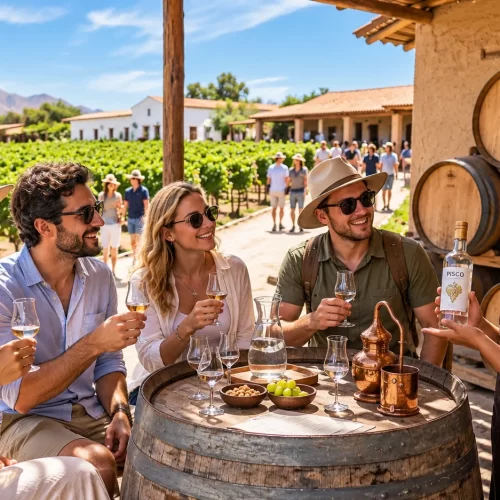
- Artisanal Cocktail Program: Sip botanical Pisco Chilcanos infused with local herbs and passion fruit, or enjoy a glass of crisp South American white wine while taking in the floral aromas of the garden.
Peruvian Luxe reserves premium veranda tables positioned directly alongside the flowering bougainvillea gardens, coordinating seamless timing so your meal flows naturally after your private museum tour.
Curated Itinerary: How to Structure Your VIP Visit
To maximize your cultural immersion, Peruvian Luxe recommends scheduling your visit in the late afternoon to experience the museum both in daylight and under its romantic evening illumination.
The Ideal 3-Hour VIP Cultural Experience
- 04:00 PM – Private Transfer: Your chauffeur welcomes you at your luxury oceanfront hotel in Miraflores or San Isidro for a comfortable 25-minute private drive in a luxury SUV to Pueblo Libre.
- 04:30 PM – Botanical Gardens & Pyramid Architecture: Stroll through the lush exterior gardens with your private art historian guide, discovering the history of the 7th-century adobe pyramid beneath the mansion.
- 05:00 PM – Chronological Galleries & Gold Vaults: Explore the core pre-Columbian collection, delving into Cupisnique, Nazca, Moche, and Chimú metallurgy in the Gold and Silver vault.
- 06:00 PM – The Erotic Ceramics & Open Storeroom: Walk the aisles of the Depósito Abierto, examining thousands of classified vessels, followed by an enlightened exploration of the Erotic Ceramics Gallery.
- 06:45 PM – Boutique Shopping: Visit the museum’s curated gift shop, renowned for certified, museum-quality ceramic replicas handcrafted by master Peruvian artisans using authentic ancient techniques, alongside high-end silver jewelry and alpaca textiles.
- 07:15 PM – Reserved Garden Dinner: Settle into your candlelit veranda table at Cafe del Museo Larco for an unforgettable dinner surrounded by blooming orchids and illuminated colonial arches.
- 09:00 PM – Private Chauffeur Return: Relax as your private vehicle whisks you back to your hotel.
Family-Friendly Explorations
If you are traveling to Lima with family, the Larco Museum is an exceptional highlight for children and teenagers. The animal iconography, vivid monster legends, and treasure-filled gold vaults ignite youthful imaginations. Peruvian Luxe provides child-friendly specialist guides who turn the visit into an engaging archaeological treasure hunt.
Frequently Asked Questions About the Larco Museum in Lima
Where is the Larco Museum located in Lima?
The Larco Museum (Museo Larco) is located at Avenida Simón Bolívar 1515 in the Pueblo Libre district of Lima. Pueblo Libre is a traditional, historic residential neighborhood situated approximately 20 to 30 minutes by private vehicle from the luxury hotel districts of Miraflores and San Isidro.
What makes the Larco Museum different from other museums in Peru?
Unlike conventional museums where artifacts are displayed with minimal context, the Larco Museum offers a clear chronological journey through five thousand years of pre-Columbian history, spanning civilizations that predated the Incas by millennia. Furthermore, it features the world’s finest pre-Columbian Gold and Silver Gallery, the globally unique Erotic Ceramics Gallery, an unprecedented Open Storeroom containing thirty thousand cataloged pieces, and world-class garden dining—all housed inside an 18th-century vice-royal mansion built atop a 7th-century pyramid.
What is the significance of the Erotic Ceramics Gallery?
The Moche erotic ceramics displayed at Museo Larco are not modern pornography; they are sacred pre-Columbian religious artifacts dating from 100 AD to 800 AD. In ancient Andean cosmology, sexuality was directly connected to natural fertility, water cycles, agricultural regeneration, and communication with ancestors in the underworld. These vessels were used in sacred burial rituals and agricultural ceremonies to propitiate life-giving rain in the arid desert.
Is the Larco Museum suitable for children and families?
Yes, the Larco Museum is one of the most family-friendly cultural attractions in Lima. Children are fascinated by the dazzling gold masks, lifelike Moche animal ceramics, and the open storeroom filled with thousands of ancient pots. Note that the Erotic Ceramics Gallery is located in a separate, discrete pavilion adjacent to the main gardens, allowing parents to choose whether or not to include it in their family visit.
What are the opening hours of the Larco Museum?
The Larco Museum is generally open daily from 9:00 AM to 7:00 PM (with the last entry to galleries around 6:00 PM). The Cafe del Museo Larco restaurant remains open later into the evening, often until 10:00 PM or 11:00 PM, making it an ideal destination for late afternoon tours that transition directly into an illuminated garden dinner.
Do I need to make reservations for Cafe del Museo Larco?
Yes, advance reservations are strongly recommended, especially for lunch between 12:30 PM and 2:30 PM and dinner between 7:00 PM and 9:30 PM. The terrace veranda tables overlooking the blooming gardens are in high demand among discerning international travelers and local food connoisseurs. Peruvian Luxe coordinates VIP table reservations for all our guests.
Can I take photographs inside the Larco Museum?
Yes, non-commercial photography without flash is permitted throughout the permanent exhibition galleries, open storerooms, and gardens. The museum is exceptionally photogenic, particularly the bougainvillea-draped colonial arches and the gleaming gold artifacts in the vaults. Professional commercial photography or equipment such as tripods and selfie sticks requires prior authorization.
How much time should I allocate for a visit to Museo Larco?
We recommend budgeting a minimum of two to three hours for the museum galleries and open storeroom alone. If you plan to enjoy lunch or dinner at Cafe del Museo Larco and browse the museum boutique, plan for approximately three and a half to four hours in total.
What should I buy at the Larco Museum gift boutique?
The Museo Larco boutique is widely regarded as one of the best museum shops in Latin America. It features certified, museum-grade ceramic replicas handcrafted by master artisans using ancient coastal clay and burnishing techniques. You will also find fine sterling silver jewelry inspired by pre-Columbian pectorals, premium baby alpaca scarves, and beautifully curated art and archaeology books.
How does Peruvian Luxe arrange a private tour of the Larco Museum?
Peruvian Luxe arranges fully customized private visits. We provide chauffeured round-trip transfers in luxury SUVs, paired with dedicated academic guides (archaeologists or art historians) who tailor the narrative to your personal interests. We also arrange private curator tours, after-hours access upon request, and prime veranda dining reservations at the museum restaurant.
Discover Ancient Peru in Luxury with Peruvian Luxe
The treasures of ancient Peru are not merely relics of a bygone era; they are masterworks of spiritual philosophy, cosmic balance, and sublime aesthetic achievement. To experience the Larco Museum with an expert curator, strolling through illuminated eighteenth-century cloisters and dining amid blooming orchids, is to understand the heart of Peruvian civilization before journeying onward to Cusco, the Sacred Valley, and Machu Picchu.
At Peruvian Luxe, we curate every aspect of your journey across Peru with unmatched exclusivity and personal attention. From private museum access in Lima to luxury train charters and secluded Andean lodges, your adventure is tailored to your highest expectations.
Begin planning your journey today. Contact Peruvian Luxe on WhatsApp to speak directly with our private travel designers.